Showing posts with label organic. Show all posts

Friday, July 30, 2010

How to Read those Produce Labels

Sometimes I get an apple with a sticker on it and it just won't come off.  It's not meant to be a pest but to be informative. On the sticker may be the name of the specific type of apple (or whatever produce) you may be eating.  More importantly, what's also on there is the price look up (PLU) code.  This code is a really important tool in identifying the way that your produce was grown.  There's actually a whole site devoted to helping you decipher fruit labels.

There are really only 4 types of stickers to remember and 3 categories. Labels with:
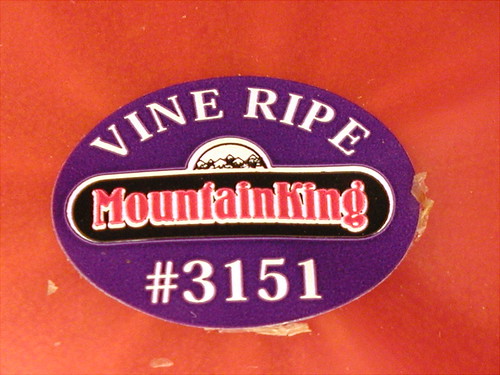
4 digits beginning with 3 or 4 are conventionally grown, non-GMO produce.  This produce has been sprayed with weed killers and chemical pesticides but is not genetically modified
5 digits beginning with 8 means that the produce is genetically modified (boo! hiss!)
5 digits beginning with 9 means it is organic! (refer to my post on the Dirty Dozen to see what foods to prioritize in buying organic)

Here are examples of different tomatoes:

~Conventionally grown with pesticides and plant killers but not GMO
~Conventionally grown with pesticides and plant killers but not GMO 


Genetically modified! Don't buy it! 


Organic 


This may be confusing but very important when you are buying produce at the supermarket!  Here's an easy little rhyme I learned to help you remember all this information:
"8, we hate.........4, is poor.........9, is mine."
Happy Shopping!


Friday, June 25, 2010

Farmers Markets: Why Should You Go?

It's been a crazy week here and I'm heading to school this weekend.  Expect shorter but just as sweet posts  while I'm in NYC listening to Paul Pitchford speak.  In the meantime, check out the June newsletter that came out today and sign up to receive it every month if you haven't already! 

One of my goals this summer is to really become a regular at the local farmers markets in Boston.  I am blessed that the city has a plethora to visit on various days throughout the week.  There is even one twice a week across the street from South Station which is only 10 minutes away from my office.  There are so many advantages, health and otherwise, to buying local and fresh. 


Tasty: We are talking about fresh food.  Food that has usually been picked in the past 24 hours or less and at a peak of ripeness!  This means that the fruits are going to be sweeter and juicer and the vegetables are going to be more colorful and crunchier.  My friend has been known to purchase heirloom tomatoes from the farmers market and eat them as her afternoon snack.

Nutrient-packed:  A produces' freshness is highly correlated to its nutritional value.  (A) They weren't picked while under ripe and allowed to ripen while traveling on a cargo ship and truck. They are picked at their peak of ripeness and brought to the market. This means that they were allowed to grow to their fullest potential and to reap the most benefits of the soil and sun.  (B) They haven't had to travel as far as grocery store produce which means that they haven't lost as many nutrients between garden and kitchen. (C) Many farmers practice proper crop rotation, a technique that has been abandoned by the larger farming industry.  Rotating crops allows the soil to replenish its minerals which still utilizing the very valuable land. 

(Likely) Organic: Many local farmers actually follow gardening methods and philosophies that would qualify as organic including crop rotation and not using dangerous pesticides and herbicides. Unfortunately, it costs a lot of money to get that certification and many farmers cannot make that investment.  The best bet is to talk to the farmers and understand what they growing methods are.

Eco-friendly: As I mentioned, many farmers follow organic growing techniques which are definitely eco-friendly.  Not using pesticides and herbicides means they stay out of our air, water, and soil as well as any wild animals that come in contact with them.  Crop rotation allows the soil to rebuild its supply, essentially give it time to heal.  Additionally, the produce has a much lower carbon footprint than produce found in the grocery store.  This is the case with organic fruits and vegetables too.  Many of which come all the way from Central and South America!

Local Economics: Lastly, you are supporting a local economy and folks who are doing honest work and growing food to nurture us.  Who deserves our money more than them?

These are only some of the reasons to start checking out your farmers markets.  I hope one or all of these reasons compel you enough to do that.  Don't know if you have a farmers market near you?  Check out Local Harvest to find one!
Monday, April 19, 2010

Organic Foods


One large component of the “Food Revolution” is the growing interest in organic foods. As people become more health and environmentally conscious, they are becoming more and more interested in eating organic foods. In fact, they are the fastest growing sector in the food market. There is no universally accepted definition for what is organic but here are some general guidelines:
  • Fruits & vegetables: Grown without the use of pesticides, synthetic fertilizers, sewage sludge, genetically modified organisms (GMOs), or ionizing radiation
  • Meat & animal products (including eggs and dairy): From animals that do not take antibiotics or growth hormones
  • Processed foods (e.g., cookies, pasta, sauces): Made with a minimum of 95% organic ingredients.
The dangers of conventional foods are still scientifically inconclusive. Some studies state that organic foods are way better than conventional foods; others have shown that there are no nutritional advantages to eating organic foods over conventional and some state the complete opposite. Currently, choosing organic is very much a choice guided by your personal views on health, science, and the environment.

I’m not a scientist so I can’t say whether or not organic foods are healthier than conventional foods on an elemental level. But I trust my instincts on what food should be and make my decisions based on them. Whatever your beliefs are around the nutritional benefits of these foods, I would like to point out that when you eat conventional foods, maybe you are getting the same amount of nutrients, but you also get a healthy dose of pesticides and other foreign chemicals with it. These chemicals have been linked to diseases like cancers and allergies. Is that a chance you are willing to take? And a thought for another post, pesticides are just plain bad for the environment.

Whether you agree with my personal views or not, I’d like you to follow one of my beliefs and that is minimizing the bad stuff. I don’t think it’s reasonable to completely eliminate all the foods that are bad for us from our diets but if we set a mindset of minimizing, we can make small choices with big results. One of those is buying organic for a group of fruits and vegetables called the Dirty Dozen. The Dirty Dozen is the twelve most pesticide-laden fruits and vegetables. If you want to purchase organic foods but only have a limited budget, these foods are where you should invest. Here are the Dirty Dozen in order of worst to less worse:
Peaches
Apples
Sweet bell peppers
Celery
Nectarines
Strawberries
Cherries
Lettuce
Grapes
Pears
Spinach
Potatoes
Bonus Tip: Download this list onto your phone or write it in your notebook that you keep your grocery list so that you can always refer to it when you are food shopping.

Thanks for reading the long Monday post. This is such an expansive topic, I could go on for a long time.  In the meantime, check out these recent articles: 
 Have a great week and happy shopping!